

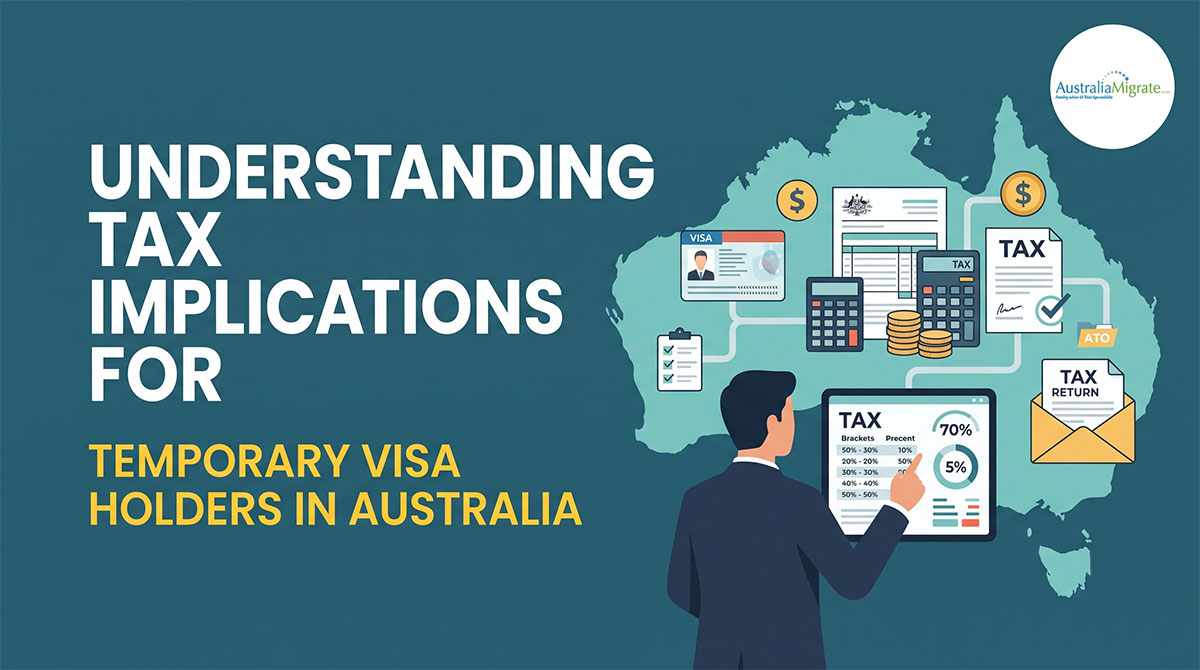
Understanding and navigating tax obligations as a temporary visa holder in Australia is crucial. It directly impacts your financial situation and living experience. You must determine your tax residency and learn how your visa influences your tax obligations.
This guide explores residency tests to determine your tax status and the implications for different temporary visa types. Understanding this information can help you make informed decisions about your visa and future in Australia.
Are Temporary Visa Holders Considered Australian Residents for Tax Purposes?
Temporary visa holders in Australia can be residents for tax purposes, depending on their residency status. The Australian Taxation Office (ATO) can decide your tax residency status based on various tests. These tests assess factors like length of stay, residence intentions and ties to Australia.
As a temporary visa holder, you can be classified as a resident for tax purposes if you meet these residency tests and as a non-resident if you do not.
1. Resides Test
The Resides test assesses an individual’s residence in Australia. It considers criteria like physical presence, accommodation, and intention to stay.
2. The Domicile Test
The Domicile test determines the permanency of your home in Australia. It assesses a temporary visa holder’s ties to Australia versus another country. Factors like your intention to stay in the country, social connections, employment, and homeownership are essential considerations in this test.
3. The 183-Day Test
The 183-day test focuses on your presence in Australia during the financial year. If you, as a temporary visa holders, are in the country for more than 183 days during a financial year, you can be considered a resident for tax purposes.
This test establishes your usual residence and how often you travel outside Australia. It also focuses on your intention to take up residence in Australia.
4. The Superannuation Test
A superannuation fund is a retirement savings scheme governed by Australian law that helps individuals save for the future. This test determines your connection or contribution to a fund. If you’re a temporary visa holders contributing to a super fund, you can be considered a resident for tax purposes.
Tax Implications for Different Temporary Visas
Your temporary visa type, such as a student visa, skill shortage work visa, or short-stay visa, can influence your tax residency status and obligations in Australia.
Temporary Skill Shortage Visa (Subclass 482)
Tax residency status and obligations can vary for 482 visa holders.
- Tax residency status: Individuals with a temporary work or skill shortage visa can be classified as tax residents if they reside or establish a home in Australia for more than 183 days in a financial year.
- Tax obligations: Skill shortage visa holders can be taxed on Australian income and submit an annual tax return.
Student Visa (Subclass 500)
Tax residency status and implications for student visa holders can vary depending on your length of stay in Australia and earnings.
- Tax residency status: If you hold a student visa, you can be considered a non-resident for tax unless you have been in the country for more than 183 days during a financial year.
- Tax obligations: Student visa holders can be taxed on an Australian income and lodge a return when earning above the tax-free threshold.
Temporary Graduate Visa (Subclass 485)
Here’s what to know about your temporary graduate visa tax residency.
- Tax residency status: You can be considered a resident for tax purposes depending on length of stay and other criteria.
- Tax obligations: Individuals with a temporary graduate visa can be taxed on earnings and benefit from tax returns.
Visitor Visa (Subclass 600)
Here’s what to expect as a visitor visa holder.
- Tax residency status: Individuals with visitor visas are typically not considered tax residents.
- Tax obligations: Visitor visas typically allow for tourism and other short-stay reasons in Australia. These visa holders are generally not permitted to work and may not have tax obligations.
FAQ’s About Tax for Temporary Visa Holders
Here are some frequently asked questions about tax requirements for temporary visa holders.
- Do I need to lodge a tax return in Australia if I am on a temporary visa? Whether a tax or non-tax resident, you must lodge a tax return if you earn an income in Australia.
- What is the tax-free threshold for temporary visa holders? The tax-free threshold for temporary visa holders is $18,200. Tax residents for a full year do not pay tax on the first $18,200 of their income.
- What income is taxable for non-residents on a temporary visa? Non-residents on temporary visas are taxed on their Australian income.
- Are student visa holders considered Australian residents for tax purposes? Individuals with student visas who have lived in Australia for longer than 6 months can be considered tax residents.
- When is the deadline for lodging my Australian tax return? The deadline for submitting your tax return in Australia is 31 October of the following financial year.
Learn More About Your Visa Tax Obligations With Help From AusMigrate
AusMigrate provides comprehensive and quality visa services, including understanding your visa, living status and tax obligations. Our team enables you to navigate the complexities of different temporary visas, ensuring you make informed decisions about your immigration.
Contact us today for more information.