

Why health insurance for visa holders matters now
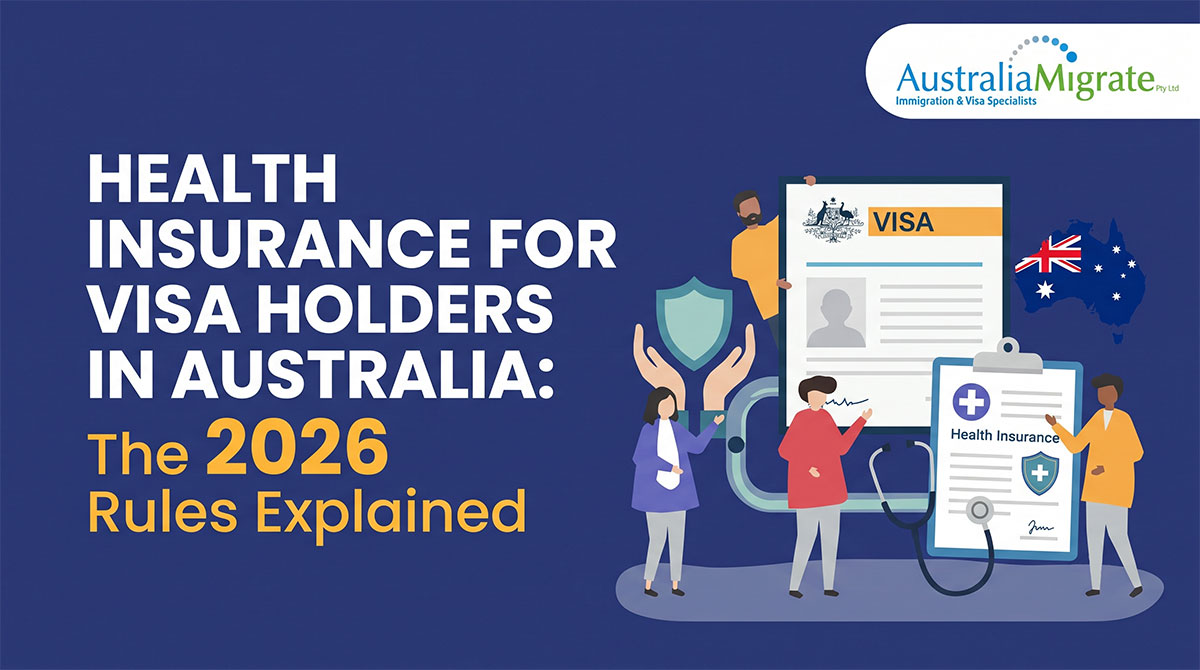
If you are an Australian visa applicant or visa holder, one detail can quietly cause big problems: your health cover. Most temporary visa holders and visitors are not eligible for Medicare, Australia’s public health system. That means you may be responsible for all of your healthcare costs during your stay — and in Australia, those costs add up fast.
The Department of Home Affairs has updated its guidance on adequate health insurance for visa holders and released a new Adequate Health Insurance Factsheet. The aim is to help applicants and holders understand what they need and what their obligations are while they are in Australia. Good health cover does two jobs at once: it protects you from unexpected medical bills, and depending on your visa, it helps you meet your visa conditions.
This guide walks through who needs cover, what condition 8501 means, what “adequate” actually looks like, how Reciprocal Health Care Agreements fit in, and the common mistakes that put a visa at risk.
Can visa holders use Medicare in Australia?
For most temporary visa holders, the short answer is no. Medicare is generally for Australian citizens, permanent residents and a few other eligible groups. Most people on temporary visas — workers, students, visitors, working holiday makers — fall outside it.
There is one exception worth knowing about: Reciprocal Health Care Agreements (RHCAs). Australia has agreements with a set of countries that give their residents limited access to Medicare for medically necessary care. We cover those below. Even then, an RHCA does not automatically remove every insurance obligation, and it does not cover everything a private policy does.
If you cannot access Medicare, private health insurance for visa holders is how you protect yourself — and often how you satisfy your visa.
What is visa condition 8501?
Condition 8501 is the health insurance condition. When it applies to your visa, you must maintain adequate health insurance for the entire time you are in Australia — not just at the start.
A key point from the updated guidance: condition 8501 is mandatory for some visas and discretionary for others. Where it is mandatory, it applies as a matter of law. Where it is discretionary, it only applies if the case officer chooses to attach it. Separately, many visas also have “adequate health insurance arrangements” as a criterion you must satisfy before the visa is granted — so insurance can matter at both the application stage and throughout your stay.
The practical message: read your grant notice. Your conditions are listed there, and 8501 is the one to look for.
OVHC, OSHC and Medicare: which applies to you?
The type of cover you need depends on your visa. Here is how the main options compare.
| Cover type | Who it’s for | Notes |
|---|---|---|
| OVHC (Overseas Visitors Health Cover) | Temporary visa holders and visitors who can’t access Medicare — e.g. many work and visitor visas | Private cover designed for overseas visitors; commonly used to meet condition 8501 |
| OSHC (Overseas Student Health Cover) | Student visa (Subclass 500) holders | Most students must hold OSHC for their whole stay; an RHCA usually does not remove this requirement |
| Medicare via an RHCA | Residents of certain countries (see below) | Limited access to medically necessary care; eligibility decided by Services Australia, not citizenship alone |
For many work visas, cover is tied directly to the visa condition. For example, Subclass 482 visas are commonly granted subject to condition 8501, sometimes called the OVHC condition. A 482 holder can usually meet the requirement with adequate health insurance or Medicare access under an RHCA, for the duration of their stay.
What counts as “adequate” health insurance?
This is where the factsheet is most useful. The Department sets out a recommended minimum level of cover. At a minimum, your policy should cover:
- Out-of-hospital medical services — visits to the GP, specialist consultations, pathology tests, X-rays and imaging.
- Hospital treatment — in a public or private hospital.
- Medical devices and human tissue products — prostheses.
- Pharmaceuticals — including prescription medicines.
A policy that only covers hospital stays, or only emergencies, may not meet the standard. When you compare policies, check that each of these four areas is included — not just the headline price.
Some commercial sources quote a minimum level of cover per person per year and talk about re-entry bans for non-compliance. We have not confirmed those specific figures in the official factsheet, so treat them as unverified and check your own visa’s requirements — [CONFIRM WITH CLIENT / Home Affairs factsheet].
Reciprocal Health Care Agreements: the country list
Australia has Reciprocal Health Care Agreements with a number of countries. Residents of these countries may get limited access to Medicare for medically necessary treatment while they are here. The countries commonly listed are:
New Zealand, the United Kingdom, the Republic of Ireland, Sweden, the Netherlands, Finland, Italy, Belgium, Malta, Slovenia and Norway.
This list can change, and eligibility is decided by Services Australia — [CONFIRM current list with Services Australia]. A few important wrinkles from the guidance:
- Being a citizen of an RHCA country is not enough on its own. Services Australia determines whether you can actually enrol in Medicare under an agreement.
- Irish citizens are treated differently for visa purposes — an Irish passport is generally accepted as evidence of adequate health insurance arrangements.
- Malta and Italy residents get reciprocal Medicare access only for the first six months of their stay. That is enough to meet the requirement at application stage, but after six months they must arrange their own cover.
- Students generally still need OSHC even if they can access Medicare under an RHCA.
You may be able to apply for an exemption from the OVHC condition if you are covered by an RHCA and have enrolled in Medicare. Whether that applies to you depends on your visa and circumstances.
How much does health insurance for visa holders cost?
Costs vary widely by provider, your age, how many people are covered, and the level of cover. Because prices change and depend on your situation, we do not quote a single figure as fact. Commercial comparison sites in 2026 report broad ranges — singles at one end and family plans much higher — but those figures conflict between sources, so use them only as a rough guide and get a live quote.
| Cost factor | What drives it |
|---|---|
| Who is covered | Single, couple or family — family plans cost more |
| Level of cover | Hospital-only is cheaper; hospital-plus-medical costs more but meets the standard better |
| Your age | Premiums generally rise with age |
| Provider | Different insurers price the same cover differently |
| Policy term | Length of your visa and stay |
When budgeting, weigh the premium against what a single hospital admission could cost without cover. For most visa holders, that comparison makes adequate cover the sensible choice well before it is a visa requirement.
How to get compliant health insurance, step by step
- Check your visa conditions. Open your grant notice and look for condition 8501 and any health insurance requirement.
- Work out which cover applies. OVHC for most temporary visa holders, OSHC for students, or Medicare via an RHCA if you qualify.
- Confirm RHCA eligibility if relevant. Check with Services Australia — citizenship alone is not enough.
- Compare policies on the four coverage areas. Out-of-hospital medical, hospital, prostheses and pharmaceuticals.
- Buy cover that spans your whole stay. Condition 8501 requires continuous cover, not just cover at entry.
- Keep your evidence. Save your policy certificate — you may need to show it for the visa or at renewal.
- Set a renewal reminder. Cover that lapses mid-stay can breach your visa.
Common mistakes that put a visa at risk
- Assuming you can use Medicare. Most temporary visa holders cannot. Build your plan around that.
- Letting cover lapse. Condition 8501 means continuous cover. A gap — even a short one — can be a breach.
- Buying hospital-only cover. The recommended standard also covers out-of-hospital medical, prostheses and pharmaceuticals.
- Relying on citizenship for an RHCA. Services Australia decides eligibility, and some agreements are time-limited (Malta and Italy, six months).
- Students buying OVHC instead of OSHC. Student visa holders generally need OSHC, and an RHCA usually does not remove that.
- Not reading the grant notice. Your exact conditions are listed there. Guessing is how people get caught out.
Related pages on Australia Migrate
- Student visa (Subclass 500) — OSHC and study requirements
- Temporary Skill Shortage / Skills in Demand (Subclass 482) — condition 8501 and work sponsorship
- Graduate visa (Subclass 485) — post-study work visa
- Sponsored Parent visa (Subclass 870) — health insurance for visiting parents
- Contact our registered migration team
How Australia Migrate can help
Health insurance sits quietly inside your visa conditions, but getting it wrong can affect your stay. The practical path is to confirm exactly what your visa requires, choose cover that genuinely meets the standard, and keep it in place for the whole period.
Our registered migration team (MARN 0001947) helps applicants and visa holders understand their health insurance obligations, read their visa conditions correctly, and plan cover that keeps them compliant — whether that is OVHC, OSHC, or Medicare access under a Reciprocal Health Care Agreement. All advice is provided by a registered migration agent accountable to the Office of the Migration Agents Registration Authority.
Not sure what your visa requires for health cover? Talk to our registered migration team for clear advice based on your visa and circumstances.
Frequently asked questions
Do all visa holders need health insurance in Australia?
Not all, but many do. Some visas require adequate health insurance before grant, and some carry condition 8501, which means you must hold adequate cover for your whole stay. Check your grant notice for your conditions.
Can temporary visa holders use Medicare?
Most cannot. Medicare is generally for citizens and permanent residents. The main exception is limited access under a Reciprocal Health Care Agreement, and eligibility for that is decided by Services Australia.
What is condition 8501?
It is the health insurance condition. When it applies, you must maintain adequate health insurance for the entire time you are in Australia. It is mandatory for some visas and discretionary for others.
What does “adequate health insurance” cover?
The Department recommends cover for out-of-hospital medical services (GP, specialist, pathology, X-rays), hospital treatment in a public or private hospital, medical devices and human tissue products (prostheses), and pharmaceuticals including prescription medicines.
What is the difference between OVHC and OSHC?
OVHC (Overseas Visitors Health Cover) is for most temporary visa holders who cannot access Medicare. OSHC (Overseas Student Health Cover) is for Student visa (Subclass 500) holders, who generally must hold it for their whole stay.
Which countries have a Reciprocal Health Care Agreement with Australia?
Countries commonly listed include New Zealand, the United Kingdom, the Republic of Ireland, Sweden, the Netherlands, Finland, Italy, Belgium, Malta, Slovenia and Norway. The list can change, so confirm with Services Australia. Citizenship alone does not guarantee Medicare access.
Does a 482 visa need health insurance?
Yes. Subclass 482 visas are commonly granted subject to condition 8501. You can usually meet it with adequate health insurance or Medicare access under a Reciprocal Health Care Agreement, for the duration of your stay.